Data-backed results,
not opinion.
By measuring what matters, Continental Cleaning provides documented and validated cleaning services to keep your assets running. We don't just clean — we manage risks, lower costs, and extend the useful life of your equipment.
Dust is a downtime risk.
Airborne particulate, construction dust, and corrosive gases degrade server reliability, clog cooling, and threaten uptime SLAs. Contamination embedded during construction becomes exponentially more expensive to remove once a hall is live — which is why hyperscale, colocation, and enterprise operators specify certified critical-environment cleaning at every phase.
Keep your IT assets under warranty
Extend the life of your equipment
Low-moisture, ESD-safe, reversible methods
We don't say it's clean.
We certify it.
Most cleaning contractors just hand you an invoice — we deliver ISO certificates with documented records. Every data hall we certify is surveyed with annually calibrated equipment to comply with ISO, ASHRAE, NFPA, and ISA standards.
- 01ISO 14644-1 Class 8 certificate of compliance
- 02Calibrated particle-count data, plotted and trended
- 03Field-signed checklists and time-stamped photo logs
Safety is the first deliverable.
On a live hall, the cheapest bid is rarely the lowest cost. These are the four things that decide whether a cleaning contractor is a risk or a control.
Four controls · one contractor
First slab to final turnover. One partner.
Cleaning usually changes hands between construction and operation, and the contamination history goes with it. We hold the whole lifecycle instead, so the baseline taken during construction is part of the same record set that shows your hall is compliant three years into occupancy.
Core & Shell
Construction-phase cleaning of the base building & envelope
- Bulk debris and construction dust removed with HEPA-filtered equipment
- Airborne particles & crystalline silica controlled to OSHA 29 CFR 1926.1153
- Trade-transition cleaning sequenced to your GC schedule
- Barriers and negative-air controls to restrict dust migration
- Thorough site and building envelope cleaning
- Particle count reporting
- Detailed interior final cleaning with baseline particle surveys recorded for each data hall
Select a phase · scope accumulates through fit-out
Cleanliness starts before the building is energized.
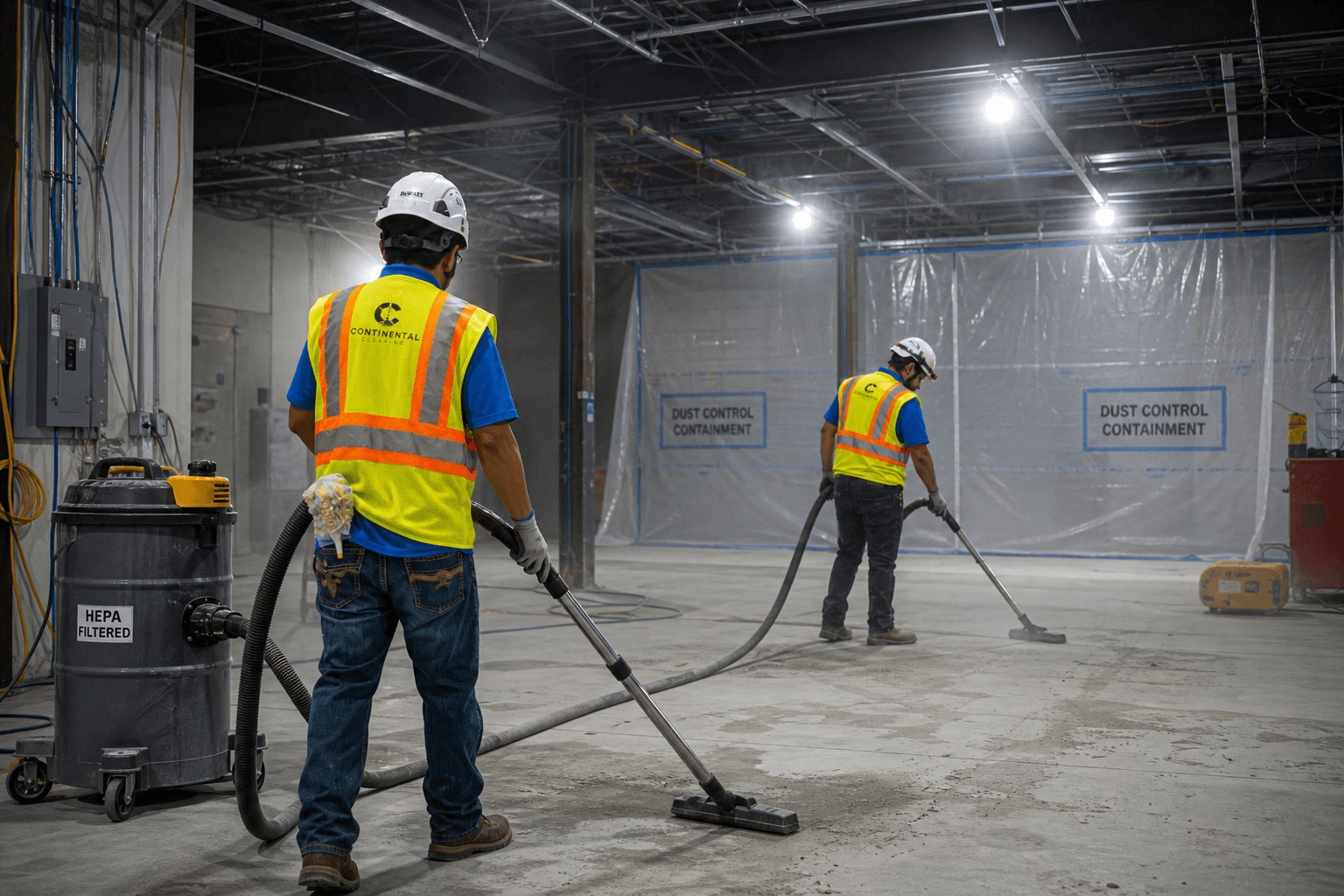
Core & Shell Construction Cleaning
- Bulk debris & construction dust removal (HEPA-filtered equipment only)
- OSHA-compliant silica (RCS) dust control
- Trade-transition cleaning coordinated with your GC schedule
- Baseline particle surveys to document progress
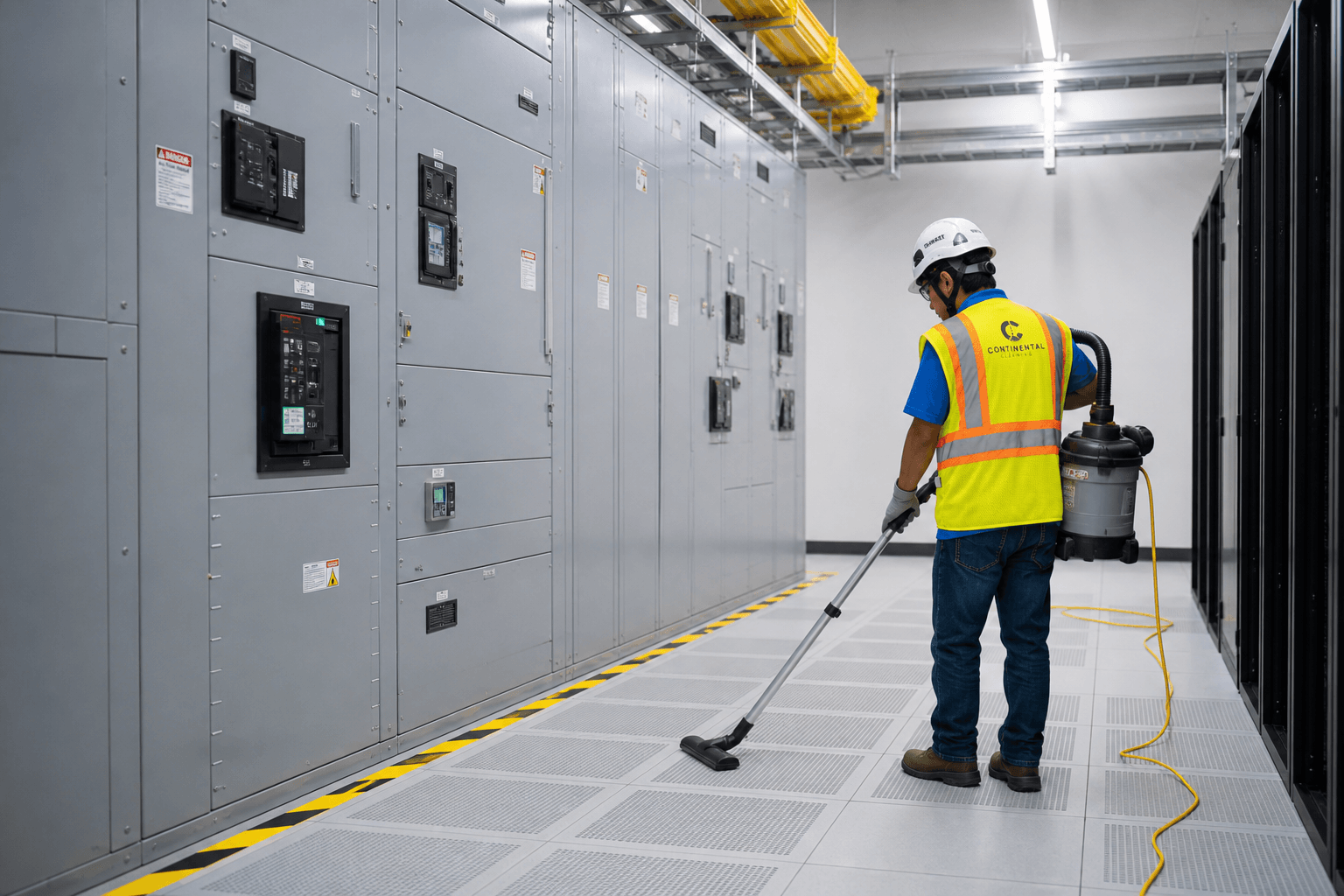
Powered Base Building (PBB) Cleaning
- NFPA 70E electrical-safety discipline around energized gear
- Low-moisture, HEPA-vacuum methods — exterior finishes only
- Raised-floor, plenum & overhead infrastructure cleaning
- Particle trending toward the ISO Class 8 target
From first certification to final decommissioning.
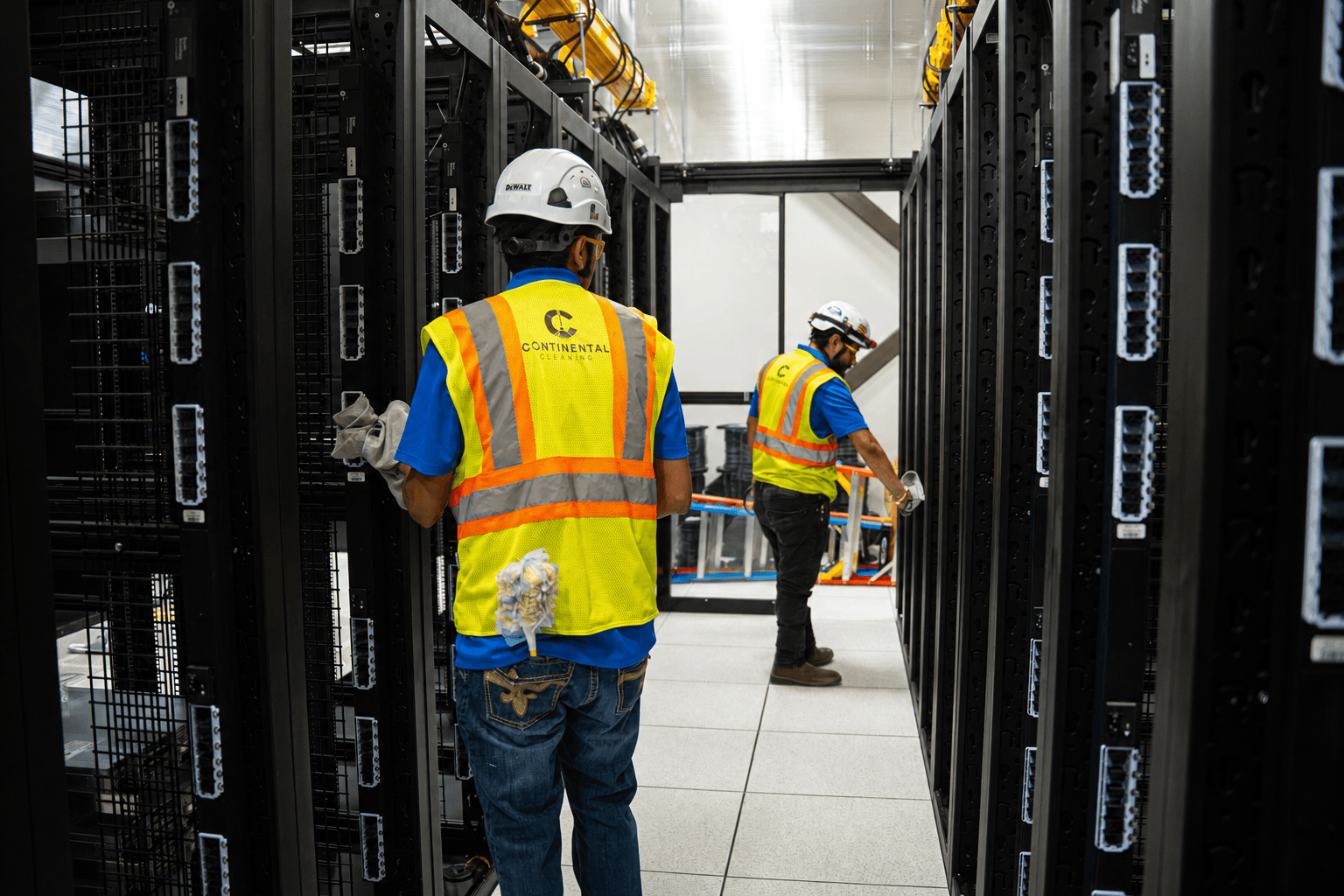
Tenant Fit-Out & ISO Class 8 Certification
- Gowned, ESD-safe final cleaning
- Calibrated particle-count certification
- CxA-ready documentation package
- Equipment move-in support
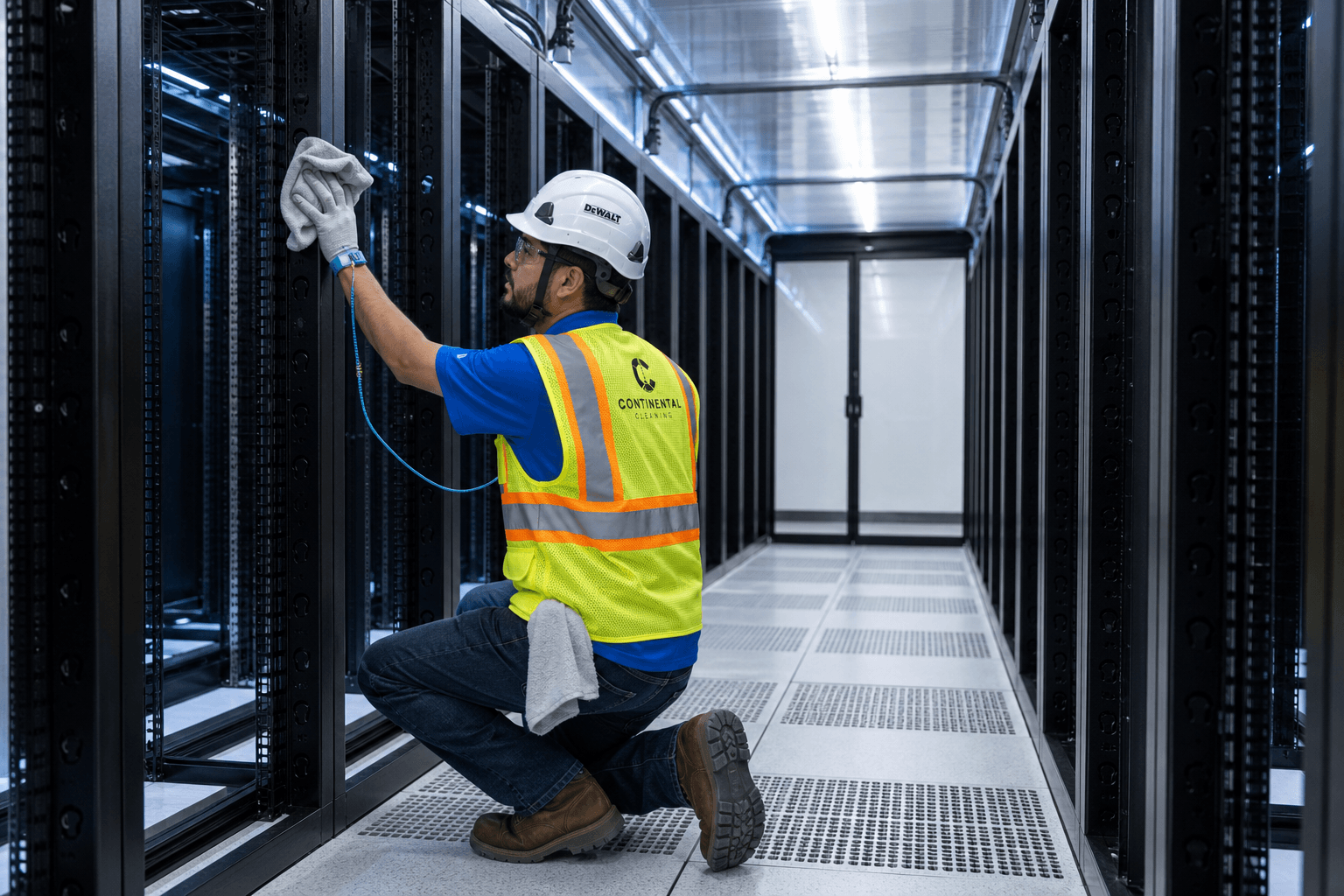
Routine White Space Cleaning (Live Halls)
- MOP / change-management compliant
- Daily to annual deep-clean programs
- ISO 14644-2 monitoring & trend reports
- Colocation & multi-tenant experience
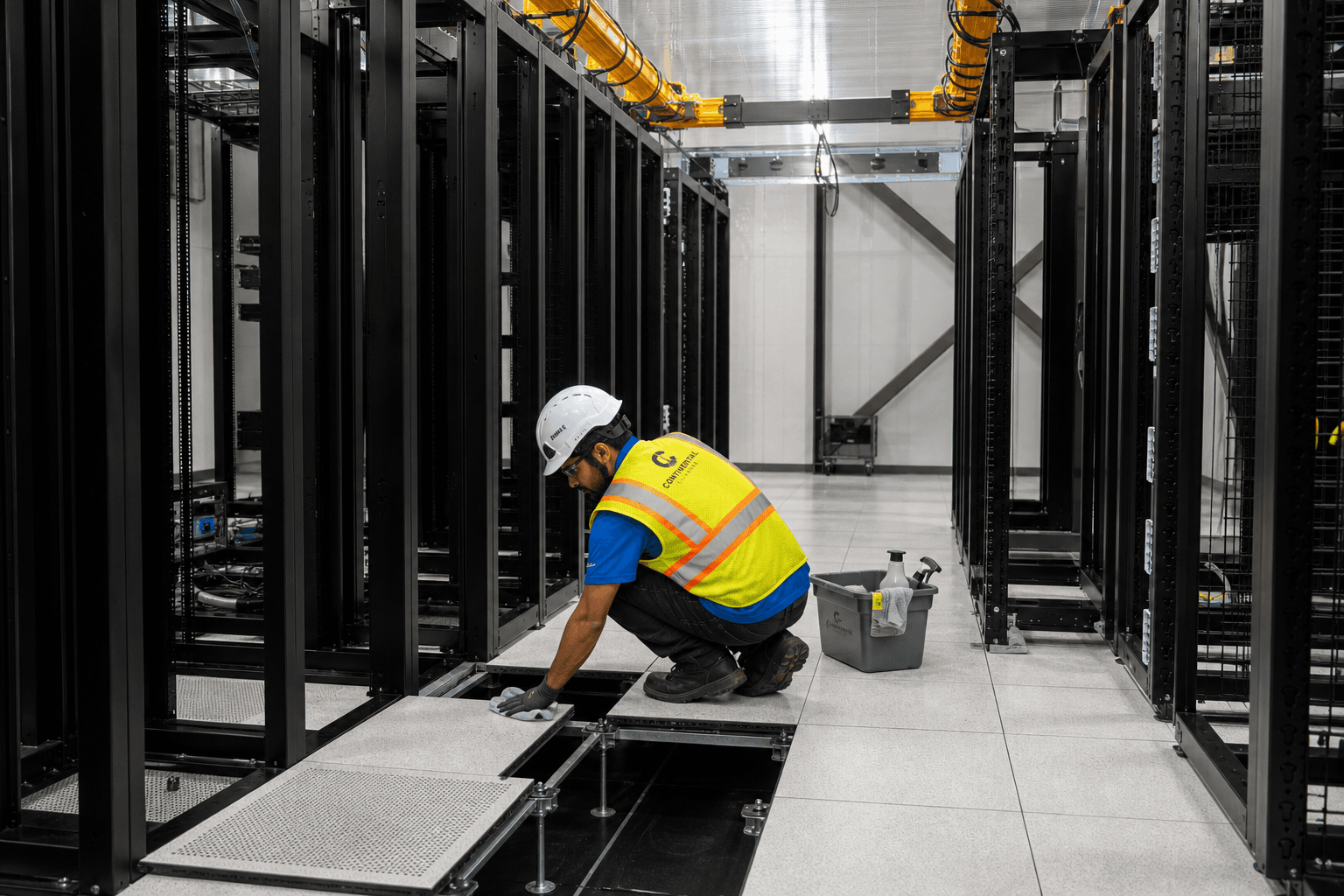
Decommissioning & Turnover Cleaning
- Containment between live & removal zones
- Strict data-security boundary for IT assets
- Closing particle survey & turnover package
- Landlord / next-tenant ready
We clean to the standard. Every time.
Every scope is executed to the most stringent applicable requirement of the governing standards your engineers, commissioning agents, and insurers already specify.
Bidding a data center project?
Put Continental Cleaning on the invite list. Send us your plans, spec, or RFP — we respond with a phase-mapped scope and price.
Common questions.
ISO Class 8 refers to an air-cleanliness classification defined in ISO 14644-1. In a data hall, achieving and maintaining Class 8 means airborne particulate is controlled to a level that protects sensitive electronics, cooling systems, and long-term uptime. Our fit-out cleans culminate in a calibrated particle-count survey that verifies the environment against the standard.